
What Makes a Great Pro Kabaddi Coach? Skills, Tactics and Leadership
The Pro Kabaddi League have grown in leaps and bounds over the years and credit goes to players who have been eager to develop new skills in their armory. We have seen coaches like Randhir Sehrawat being part of one…
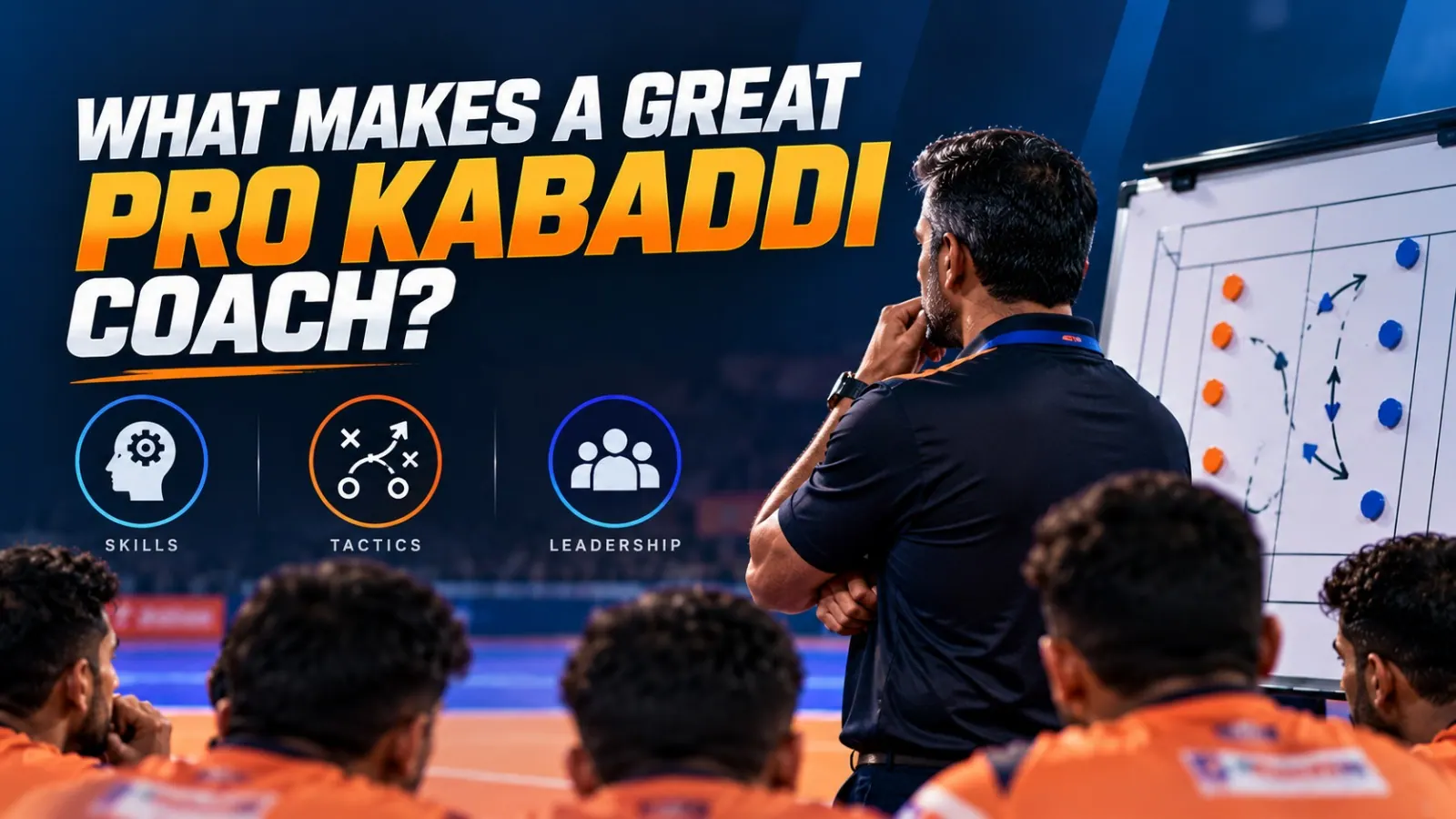
The Pro Kabaddi League have grown in leaps and bounds over the years and credit goes to players who have been eager to develop new skills in their armory.
We have seen coaches like Randhir Sehrawat being part of one franchise right from 1st season to Season 11 where they created legacy by winning marquee event in Season 6 under able leadership of Rohit Kumar “Akki”
We have also seen coaches change with time based on how good they have been for the franchise.
Here in this article, we will reveal what makes a pro Kabaddi league coach shine to the best of their ability to be shared in the below format:
A- Core Skills: The Primary role of Coach is to understand, deep technicality around game where they can manuver entire strategy around them.
They also need to stay ahead of curve where they need to think about all possible permutations and combinations where they can develop strategy to dominate opponents.
They also belong to list of those coaches where all raiding and defensive moves is imprimnted in their heart and mind of all players.
B- Video and Data Analysis Related Work: You might argue, considering the current technological advancements, Video and Data Analysis plays a vital role as instinct is important but gathering data through technology and applying those tactics in actual match situation does work.
C-Specialized Staff Based Coordination: Here in this role you will be asked to work with dietician, video analyst, assistant coaches and trainers and develop a strategy that would work well in practie as well as in actual match based scenario.
D- Situational Adjustements: The Situational Adjustments is all about taking decisions under specific time frame, it is all based on time,also decision take place in do or die situations.
E- Rotation and Bench Strength Strategy: Here in this step, coach is certainly asked to go for and apply rotation and bench strength strategy where the coach needs to understand which players make it Top 7 whereas other would make it towards Bench strength .
F- Mental Conditioning and Composure: The Coach role is not only limited to physical abilities rathenr than focusing also on the mental side of the game.
The Job role also consist of keep player’s pressure under check, managing post error frustration and building high pressure temparament among players.
G- Empathy and Player Alignment: As coach you need to understand, team first culture where players feel respected and heard as there are days where you wouldn’t do well as player you need to talk to them as player on what’s not working for players.
H- Decisive Communication: The Decisive Communication is extremely important, delivering sharp and tactical strategies towards mid of the match.
More Details about Pro Kabaddi League:
The Pro Kabaddi League (PKL) has evolved from a traditional Indian sport into a high-speed, data-driven, and tactically sophisticated global spectacle.
While star raiders and agile defenders light up the mat, the mastermind steering the team through the high-octane 45-minute battles is the coach.
From long-term visionaries like Randhir Singh Sehrawat—who built a lasting legacy with the Bengaluru Bulls—to dynamic tacticians who adapt from season to season, elite coaches possess a distinct blueprint for success.
Here is what makes a Pro Kabaddi League coach shine at the highest level:
At the heart of coaching lies an intrinsic, deep-seated technical understanding of Kabaddi.
Elite coaches master all fundamental raiding and defensive maneuvers—from footwork, hand touches, and toe touches to ankle holds, thigh holds, and chain tackles.
Beyond fundamental mechanics, a great coach stays ahead of the curve by analyzing endless permutations and combinations.
They blueprint custom strategies to exploit specific opponent weaknesses, ensuring that defensive formations and raiding patterns are so deeply ingrained in the players’ hearts and minds that execution becomes second nature under pressure.
Instinct and gut feeling remain vital in a sport as fluid as Kabaddi, but modern PKL teams rely heavily on objective data.
Today’s top coaches leverage sophisticated video analysis and statistical tracking to decode opponent habits.
They analyze mat-positioning heat maps, successful tackle percentages, favorite escape routes for raiders, and defensive chain vulnerabilities.
A successful coach bridge the gap between digital insights and raw athletic execution, translating complex data sets into actionable, real-time match tacti
A head coach does not operate in isolation; they function as the conductor of a multi-disciplinary orchestra.
Success requires seamless coordination across a specialized support team:
For executing positional drills and fine-tuning individual skill sets.
A master coach aligns all these moving parts into a unified vision that translates effectively from training sessions to match nights.
Especially during critical Do-or-Die raids or when facing Super Tackle scenarios (three or fewer defenders on the mat).
Deciding whether to press for an early tackle, instruct a raider to target a specific corner defender, or play for a safe empty raid demands split-second clarity and flawless tactical timing.
Navigating a long, physically punishing PKL season requires smart squad management.
A great coach accurately identifies their baseline Starting 7 while systematically developing a deep, ready-to-fire bench.
Knowing precisely when to rest key raiders, when to introduce tactical impact substitutes, and how to maintain competitive
synergy when rotating defenders keeps the squad fresh, unpredictable, and resilient against injuries.
Physical prowess alone cannot win tight championships.
A major component of the coaching role involves managing the psychological weight of high-stakes competition. High-performing coaches help players:
Maintaining clarity during tight, down-to-the-wire finishes.
Helping defenders immediately reset emotionally after a failed tackle rather than compounding mistakes.
Keeping the squad grounded after big victories and resilient after narrow losses.
Great coaches foster an authentic “Team-First” culture where every individual feels respected and heard.
When a key raider hits a slump or a defender struggles with form, elite coaches step in with empathy rather than harsh condemnation.
By holding open, one-on-one conversations to address individual struggles, coaches build strong emotional bonds, ensuring every player remains fully aligned with the franchise’s overarching goals.
During the intense, noisy atmosphere of a PKL match, clarity is paramount.
Coaches have minimal time—primarily during official time-outs and the mid-game break—to deliver instructions.
Successful coaches excel at decisive communication: cutting through noise to provide sharp, direct, and actionable tactical tweaks.
Instead of overwhelming players with information, they deliver precise, 15-second instructions that players can execute instantly upon returning to the mat.
The Pro Kabaddi League (PKL) has evolved from a traditional Indian sport into a high-speed, data-driven, and tactically sophisticated global spectacle. While star raiders light up the mat with acrobatic escapes and agile defenders execute bone-jarring tackles, the mastermind steering the team through every intense 45-minute battle is the coach. From long-term visionaries like Randhir Singh Sehrawat—who built a lasting legacy with the Bengaluru Bulls from Season 1 through Season 11, crowning their journey with a championship in Season 6 under Rohit Kumar’s leadership—to dynamic tacticians hired to deliver immediate results, elite coaches possess a distinct blueprint for success.
A. Core Skills & Tactical Mastery
At the heart of coaching lies an intrinsic, deep-seated technical understanding of Kabaddi. Elite coaches master all fundamental raiding and defensive maneuvers—from footwork, hand touches, and toe touches to ankle holds, thigh holds, dubkis, and chain tackles. Beyond fundamental mechanics, a great coach stays ahead of the curve by analyzing endless permutations and combinations. They blueprint custom strategies to exploit specific opponent weaknesses, ensuring that defensive formations and raiding patterns are so deeply ingrained in the players’ hearts and minds that execution on the mat becomes second nature under extreme pressure.
B. Video & Data Analysis Integration
Instinct and gut feeling remain vital in a sport as fluid as Kabaddi, but modern PKL franchises rely heavily on objective data. Today’s top coaches leverage sophisticated video analysis and statistical tracking to decode opponent habits. They analyze mat-positioning heat maps, successful tackle percentages, favorite escape routes for raiders, and defensive chain vulnerabilities. A successful coach bridges the gap between digital insights and raw athletic execution, translating complex data sets into actionable, real-time match tactics that give their team a decisive edge.
C. Specialized Staff-Based Coordination
A head coach does not operate in isolation; they function as the conductor of a multi-disciplinary orchestra. Success requires seamless coordination across a specialized support team, including assistant coaches, sports dietitians, strength and conditioning trainers, and video analysts. For instance, while assistant coaches execute positional drills and fine-tune individual skill sets, dietitians and trainers monitor recovery and energy levels. A master coach aligns all these moving parts into a unified vision that translates effectively from rigorous practice sessions to match nights.
D. Situational Adjustments & In-Game Decisions
Kabaddi matches turn on split-second decisions where time management is critical. The situational adjustment phase is where a coach’s sharp judgment pays off, particularly during high-stakes Do-or-Die raids or Super Tackle situations (when three or fewer defenders remain on the mat). Deciding whether to press for an early aggressive tackle, instruct a raider to target a specific weak corner defender, or play for a safe empty raid demands absolute clarity and flawless tactical timing under extreme clock pressure.
E. Squad Rotation & Bench Strength Strategy
Navigating a long, physically punishing PKL season requires smart squad management. A great coach accurately identifies their baseline Starting 7 while systematically developing a deep, ready-to-fire bench. Knowing precisely when to rest key raiders, when to introduce tactical impact substitutes, and how to maintain competitive synergy when rotating defenders keeps the squad fresh, unpredictable, and resilient against mid-season injuries and fatigue.
F. Mental Conditioning & Composure
Physical prowess alone cannot win tight championships; managing the psychological weight of high-stakes competition is equally essential. High-performing coaches help players develop high-pressure temperament, maintain mental clarity during down-to-the-wire finishes, and avoid post-error frustration. They teach defenders to immediately reset emotionally after a failed tackle rather than compounding mistakes, keeping the entire squad grounded after big victories and resilient after narrow losses.
G. Empathy & Player Alignment
Great coaches foster an authentic “Team-First” culture where every individual feels respected and heard. When a star raider hits a slump or a defender struggles with timing, elite coaches step in with empathy rather than harsh public condemnation. By holding open, one-on-one conversations to address individual struggles, coaches build strong emotional bonds, ensuring every player remains fully aligned with the franchise’s overarching goals.
H. Decisive Mid-Match Communication
During the intense, noisy atmosphere of a PKL arena, clarity is paramount. Coaches have minimal time—primarily during official time-outs and the mid-game break—to deliver instructions. Successful coaches excel at decisive communication: cutting through the arena noise to provide sharp, direct, and actionable tactical tweaks. Instead of overwhelming players with complex information, they deliver precise 15-second instructions that players can absorb instantly and execute immediately upon returning to the mat.
Frequently Asked Questions (FAQ)
Q1: How has the role of a Pro Kabaddi League coach changed since Season 1?
Answer: In the early seasons of the Pro Kabaddi League, coaching relied heavily on traditional training methods, intuition, and physical conditioning. As the league matured into a multi-million-dollar professional competition, the coach’s role transformed dramatically. Modern PKL coaches are now tactical managers who synthesize performance analytics, work alongside specialized support staff, manage player workloads across long tournament schedules, and adapt to rapidly evolving game rules like Do-or-Die raids.
Q2: Why is Randhir Singh Sehrawat considered a benchmark for PKL coaching?
Answer: Randhir Singh Sehrawat represents stability, player development, and sustained success in the PKL. Having served as the head coach of the Bengaluru Bulls continuously from Season 1 through Season 11, he built a distinct franchise culture. His ability to scout raw talent, mentor young players into superstars (such as Pawan Sehrawat), and maintain tactical relevance culminated in winning the PKL title in Season 6, setting a gold standard for long-term coaching tenure.
Q3: How do coaches prepare for “Do-or-Die” raid situations during practice?
Answer: Coaches simulate high-pressure match scenarios repeatedly during training sessions. They create specific practice drills where raiders must score within 30 seconds against set defensive formations. Coaches train raiders to target high-probability areas, such as bonus lines or vulnerable cover defenders, while simultaneously instruction defenders on maintaining tight chain formations to prevent late escapes.
Q4: What role does video analysis play in setting up a defensive strategy?
Answer: Video analysis allows coaches to dissect an opposing raider’s habits, preferred footwork, escape routes, and speed profile. By reviewing game footage with the video analyst, a coach can determine whether to deploy an ankle hold, block, or dash at specific seconds in the raid. This data is converted into visual blueprints so defenders know exactly when and where to initiate tackles on the mat.
Q5: How do coaches handle player fatigue and injury prevention during a long season?
Answer: Elite coaches work closely with sports physiotherapists, strength and conditioning trainers, and dietitians to monitor player workloads. They use fitness metrics and recovery tracking to implement structured squad rotation. By utilizing impact substitutes and trusting bench strength, coaches protect key starters from burnout during the grueling league stage to ensure maximum freshness for the playoffs.
Q6: What makes communication effective during a 30-second time-out?
Answer: During a fast-paced match, players are physically exhausted and operating on high adrenaline. Effective coaches avoid vague speeches or overly complex instructions. Instead, they give short, direct, and focused directives—such as specifying which corner defender to attack, pointing out a weak chain link, or instructing the team to hold back and avoid unnecessary tackles.
Q7: How do elite PKL coaches rebuild a player’s confidence after a poor match?
Answer: Rather than resorting to public criticism, top coaches emphasize empathy and constructive feedback. They conduct private, one-on-one sessions to review footage, highlight correct movements alongside mistakes, and provide specific technical adjustments. Reassuring players of their place in the team helps reduce post-error frustration and restores their composure for the next game.
My Perspective:
Overall, Kabaddi Coaches plays an important role, in developing a team a perfect caricature, and someone like Joginder Narwal is someone , who hand picked each and every player for Dabang Delhi KC, who won last season.
Joginder Narwal revealed his strategy “All these players who have done well- offense and defense all these players have done well in the crunch phase of the game”
Overall, Kabaddi Coaches have to make sure all stone turned pretty well, as the one who applied themselves really well, where they can deliver best quality.
Kabaddi Coach, is certainly one many man army kind of job where they need to plan- pre, during and post plan are executed by coach and they certainly get those powers to execute those plans.
The accountability lies with them and they also come in press conferences to answer all sort of questions.
Coaches does play an important role and credit should be given to them for innovating their skills pretty well as you need to change as game is also evolving fast, so you need those coaches who adapt those tactics, where they can do wonders to the best of their ability and coaches should be appreciated for it.