
Kabaddi Match Strategy Explained: How Teams Plan Raids and Defend
Kabaddi is a game of strength, speed, skill and smart planning. Every team enters the mat with a plan to score points, stop the opposition and control the match. However, winning a kabaddi match is not only about having…
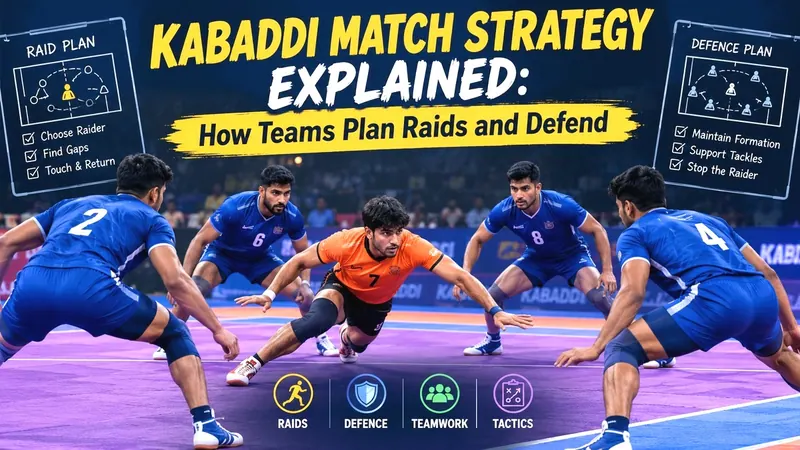
Kabaddi is a game of strength, speed, skill and smart planning. Every team enters the mat with a plan to score points, stop the opposition and control the match. However, winning a kabaddi match is not only about having strong raiders or powerful defenders. Teams also need to understand the game situation, study their opponents and make the right decisions at the right time.
A good kabaddi match strategy covers both raiding and defending. Raiders must know when to attack, which defender to target and when to return safely. At the same time, defenders need to work together, choose the right moment to make a tackle and avoid giving away easy points. The captain and coach also play an important role by changing the plan according to the score, the number of players on the mat and the time left in the match.
In professional kabaddi, teams spend time studying player records, match videos and the playing styles of their opponents. They prepare different plans for different raiders and defenders before stepping onto the mat. During the match, they continue to adjust these plans based on what is happening. Let us understand how kabaddi teams plan their raids and defence, use player positions and manage different match situations.
Understanding the Basic Kabaddi Match Strategy
Kabaddi match strategy means the plan a team uses to score points and stop the other team from scoring. It includes decisions about raiding order, defensive positions, tackling methods, player movement and the use of time. A team may enter a match with one main plan, but it must also be ready to change that plan when the situation demands it.
The first part of a strategy is to understand the strengths and weaknesses of both teams. For example, a team with quick raiders may try to score through fast movements and sudden touches. On the other hand, a team with strong defenders may focus on keeping a close defensive formation and forcing raiders into difficult positions.
The second part is to decide how much risk the team should take. Sometimes, a raider needs to attempt a touch to help the team score, while at other times, returning safely without a point may be the smarter choice. Similarly, defenders must decide whether to attempt an early tackle or wait for a better opportunity to stop the raider.
How Kabaddi Teams Plan Their Raids
A raid is the attacking turn in which a player enters the opposition’s half and tries to score points before returning safely to their own half. The raider can score by touching opponents and returning safely, while the defending team tries to stop the raider from coming back. Every raid requires a quick decision because the raider has limited time to study the defenders and choose an action.
Before a raid, teams consider the score, the number of players on the mat, the raider’s condition and the strength of the opposition’s defence. A team may send its best raider when it needs a point quickly, or use another raider to test the opposition’s defensive pattern. The coach and captain may also consider which defenders are on the mat before deciding who should take the next raid.
A planned raid does not mean that the raider follows the same movement every time. Instead, the raider looks for chances created by the defenders’ positions and reactions. A small change in direction, a quick hand touch or a sudden escape movement can create the opening needed to score a point.
Choosing the Right Raider
Most teams have raiders with different playing styles. Some are known for their speed and quick footwork, while others are better at toe touches, hand touches or sudden changes in direction. The coach decides how to use these strengths according to the match situation and the defenders present on the mat.
For example, a fast raider may be useful against defenders who move slowly or leave gaps in their formation. A raider with good reach may try hand touches against defenders who stand too close to the baulk line. Meanwhile, a player with strong escape skills may be selected when the opposition has a habit of attempting quick tackles.
The raiding order is also important. A coach may rotate raiders to manage their energy and prevent the opposition from reading the same patterns. However, the order can change during a match because of injuries, player form, the score or a need for a specific type of raid.
Studying the Defenders Before Attacking
Before making a move, a raider should observe the position of the defenders. The raider looks for gaps, checks which defender is standing too far from the group and notices whether the corners or covers are ready to move forward. This helps the raider choose a target and avoid entering an area where a quick tackle is likely.
For instance, if the right corner moves forward too early, a skilled raider may use a quick hand touch or change direction to escape. If the covers are standing close together, the raider may look for space near the side of the formation. However, the raider must remain alert because defenders can use these movements to set a trap.
Teams often study videos of opposing defenders to identify their habits. A defender may regularly move forward when a raider approaches or prefer to tackle from a particular side. This information helps the raider prepare suitable movements before the match.
Common Raiding Techniques Used in Kabaddi
Different raiding techniques are useful in different situations. A successful raider understands how to use these techniques without making unnecessary movements. The main aim is to score a point and return safely rather than attempt a difficult move on every raid.
Hand Touch
A hand touch is used when a raider tries to touch a defender with a hand and then escape. The raider may extend an arm towards the target and quickly move away before the defenders can grab them. Good timing and distance control are important because reaching too far can place the raider in danger.
Hand touches are often useful against defenders who stand close to the raider or fail to protect their position. However, defenders may expect this move and attempt an ankle hold or block. Therefore, raiders should avoid using the same hand-touch pattern repeatedly.
Toe Touch
A toe touch involves extending the foot to touch a defender, usually when the defender is close enough to reach. It can be useful against defenders who keep a low body position or stand slightly ahead of the defensive line. The raider must maintain balance and prepare to move back immediately after making contact.
The main risk is losing balance or allowing a defender to grab the leg. A well-timed toe touch can help a raider score without moving too deeply into the opposition’s half. However, it requires practice, body control and a clear understanding of the defender’s distance.
Dubki
A dubki is an escape movement in which a raider lowers the body and moves underneath the arms or reach of defenders attempting to hold them. It can be effective when several defenders close in and try to block the raider’s path. The raider uses body movement and timing to find a way out of the tackle.
The dubki is difficult to perform because a small mistake can allow defenders to secure their grip. Raiders generally need excellent balance, flexibility and awareness of nearby players to use it successfully. It is best used when the raider sees a clear opening rather than as a random movement.
Bonus Attempt
A bonus attempt allows a raider to try to earn a bonus point when the required conditions under the rules are met. In standard seven-a-side kabaddi, the bonus line is generally active when at least six defenders are on the mat. The raider must cross the line with the required foot and body position according to the rules, and a valid bonus can be earned without making a touch.
A bonus attempt can help a team score when defenders are standing deep or keeping a safe distance. However, the raider must understand the position of the defenders and the exact line requirement before attempting it. The defending team may also use its formation to make the bonus attempt difficult or prepare a tackle if the raider loses balance.
Running Hand Touch
A running hand touch is an attacking move in which the raider uses speed to touch a defender and continue moving away. This technique can work against defenders who are slow to close the gap or who leave space near the sides of the formation. The raider must maintain control while changing direction and preparing for the return.
Although speed can create scoring chances, moving too quickly without reading the defence can be risky. Defenders may use the raider’s forward movement to grab the legs or close the escape route. Therefore, good raiders combine speed with observation and control.
How Teams Plan Their Defence
Defence is the part of kabaddi in which players work together to stop the opposition’s raider from returning safely. Unlike raiding, where one player usually attacks at a time, defence depends heavily on teamwork and coordination. A single defender may have the strength to make a tackle, but poor timing or a lack of support can allow the raider to escape.
Before a raid begins, defenders decide where to stand and which players should be ready to make the first move. They try to maintain a formation that protects important areas of the mat without leaving easy gaps. At the same time, they observe the raider’s movement and wait for an opportunity to stop them.
A good defensive plan does not require every player to chase the raider. Instead, defenders must understand their individual roles and work together. If one player attempts a tackle, nearby teammates should be ready to support when needed, while the rest of the formation must remain aware of possible escape routes.
Understanding Kabaddi Defensive Positions
In standard seven-a-side kabaddi, the defence is usually organised around three main position groups: corners, covers and players positioned between them. Each position has a role in controlling the raider’s movement. The exact formation can change according to the number of players available and the team’s tactical plan.
Corner Defenders
The left corner and right corner defenders usually stand near the outer sides of the defensive formation. They often play an important role in ankle holds and other tackles against raiders attempting to escape through the sides. Corner defenders need good timing, strong grip and the ability to read a raider’s foot movements.
A corner defender may wait for the raider to step close before moving in for a tackle. Moving too early can give the raider time to change direction, while moving too late may allow a touch and a safe return. For this reason, corner players often study the raider’s preferred footwork and attacking style.
Cover Defenders
The left cover and right cover operate closer to the middle of the defensive formation. They often help with blocks, holds and support tackles when the raider moves into the central area. Cover defenders must communicate with the corners because their movements can decide whether a tackle succeeds or the raider finds an open route.
If a corner begins a tackle, a cover defender may move in to support and reduce the raider’s escape space. However, the movement must be timed carefully. If the cover moves too far away from the formation without support, the raider may exploit the gap and reach another defender.
Other Defensive Support
The remaining defenders help maintain the formation, watch the raider’s movement and support tackles when the opportunity appears. Their role includes protecting open spaces and ensuring that the defence does not break apart unnecessarily. Good support players are alert and understand when to move forward and when to hold their position.
The main goal is to keep the defensive formation connected. If several defenders chase the raider at the same time, they may leave a clear path for escape. A balanced formation makes it harder for the raider to find space and allows the team to respond quickly when a tackle begins.
Common Defensive Tactics in Kabaddi
Defenders use different tackling methods depending on the raider’s movement, body position and distance from the defensive line. The best tactic is usually one that allows defenders to control the raider without breaking the formation. These methods require practice because an unsuccessful tackle can give the attacking team a point.
Ankle Hold
An ankle hold is a technique in which a defender catches the raider’s ankle to stop their movement. It is often attempted when the raider reaches forward for a touch or moves close to a corner defender. If the defender times the move correctly, teammates can join the tackle and prevent the raider from returning.
However, an ankle hold can fail when the defender reaches too early or grabs the wrong position. The raider may pull the leg free or use speed and balance to escape. Therefore, the defender must judge the distance carefully and avoid unnecessary attempts when the chance of success is low.
Block
A block involves a defender using body position to stop the raider’s path. It may be used when the raider tries to move forward or return towards the midline. A strong, well-timed block can reduce the raider’s available space and allow other defenders to complete the tackle.
Blocks require coordination and correct positioning. If the defender moves without support or loses balance, the raider may move around them. Teams practise blocking so that defenders know when to close the route and how to avoid leaving another path open.
Thigh Hold and Waist Hold
A thigh hold involves catching the raider around the thigh area, while a waist hold aims to control the raider around the waist. These methods may be used when the raider is within reach and the defender has a good chance to secure a grip. Both require strength, balance and correct timing.
The main purpose is to limit the raider’s movement until other defenders can provide support. An isolated hold may not be enough against a strong raider, particularly if the raider has room to turn or pull free. For that reason, defenders need to move as a unit rather than depend on one player to finish every tackle.
Dash
A dash is a defensive move in which a defender drives into the raider to push them away from a scoring position or towards the boundary. It can be used when the raider is close to the edge and there is an opportunity to control their movement. The defender must judge the direction and timing carefully to avoid giving the raider an easy escape.
A poorly timed dash can allow the raider to move around the defender or earn points before returning. Defenders should use this tactic only when their position and support give them a reasonable chance of success. Communication between nearby players is important because a dash can quickly change the shape of the defence.
Reading the Raider and Setting a Defensive Trap
One of the main jobs of a defence is to understand what the raider is likely to do. Some raiders prefer hand touches, while others look for bonus points or use quick changes of direction. By studying these patterns, defenders can prepare their positions and reduce the raider’s chances of scoring.
A defensive trap is created when players leave what appears to be an opening but are ready to close it once the raider moves into that area. For example, a corner defender may stand slightly away from the main group while the nearby cover stays ready to support. If the raider approaches the corner, the defenders can attempt a coordinated tackle.
However, a trap only works when every defender understands the plan. If one player moves too early, the raider may notice the danger and change direction. Teams therefore practise different situations so that defenders can react together without losing their formation.
How Do-or-Die Raids Change Match Strategy
A do-or-die raid is a special match situation in which the raiding team must score a point on its third consecutive empty raid under the usual rules. If the raider does not score, the player is declared out. This rule puts extra pressure on the attacking team and gives the defending team a chance to plan a more aggressive response.
During a do-or-die raid, the raider must balance the need to score with the risk of being tackled. A quick touch may be a sensible choice if the defenders leave space, while a deep attack into a strong formation may be too risky. The raider should look for the safest available scoring chance rather than attempt a difficult move without a clear opening.
Defenders can prepare for a do-or-die raid by identifying the raider’s most common moves and keeping a strong formation. They may try to force the player towards a particular area of the mat and prevent an easy return. However, they must avoid losing control by rushing towards the raider without support.
What Happens When a Team Has Fewer Players on the Mat?
When defenders are out, the remaining players must adjust their positions and work with less space for support. A team with fewer players may be more exposed because it has fewer people to cover the sides and middle. However, players can still limit the raider’s options by maintaining their positions and avoiding unnecessary movement.
The defensive formation may become narrower, and players may need to protect the central area while staying aware of the boundaries. The captain must help the team remain organised because one poorly timed tackle can create an even bigger gap. When the team is short-handed, every player needs to understand their responsibility.
The raiding team also changes its plan when facing fewer defenders. It may look for an opportunity to score multiple touch points or attempt a bonus when the required conditions are met. Still, the raider must remain careful because a small defensive group may attempt a coordinated tackle, including a super tackle when only three or fewer defenders are on the mat.
Super Tackle Strategy
A super tackle is awarded when a defending team successfully tackles a raider while three or fewer defenders are on the mat. Under standard kabaddi rules, it earns the defending side an additional point beyond the point for the raider’s dismissal. This creates a special tactical opportunity for a team that has lost several players.
With fewer defenders available, teamwork becomes even more important. The players must keep the raider in a position where they can support one another and complete the tackle. A defender who rushes in alone may give the raider room to score, so the team needs to choose its moment carefully.
For the raider, the presence of only a few defenders can create a chance to score. However, the raider should still study their positions before attacking because the remaining players may be waiting for a super tackle opportunity. Both sides need to understand the risk and possible reward before making a move.
How the Score Changes a Team’s Strategy
The match score influences the decisions made by raiders, defenders and the captain. A team that is ahead may choose to avoid unnecessary risks and focus on maintaining its lead. Meanwhile, a team that is behind may need to take more chances to reduce the difference before the match ends.
When a team has a small lead, it may prioritise safe raids and well-organised defence. Raiders can focus on taking calculated opportunities, while defenders try to prevent easy touch points. However, playing too cautiously can also create problems if the opposition starts controlling the match.
When a team is behind, the coach may send its most reliable raiders more often or change the raiding order. The defence may also look for chances to earn quick points through successful tackles. Even then, the team should avoid making rushed decisions simply because the score is unfavourable.
All-Out Strategy in Kabaddi
An all-out happens when every player on a team is declared out under the rules. The opposing team receives points for the players dismissed and an additional all-out bonus, while the dismissed team returns to the mat according to the rules. As a result, an all-out can create a major change in the score and the number of players available.
When a team has only a few players left, the captain must understand how quickly the situation could lead to an all-out. Raiders may attempt to score enough points to help their team recover, while defenders must decide whether to protect their positions or take a calculated chance for a tackle. The right choice depends on the score and the positions of the remaining players.
The attacking team may try to target the weaker or less experienced defenders to earn multiple touch points. However, it should not rush into the formation without checking the risk of a tackle. A well-planned raid can change the match situation, while a careless attempt may allow the defending team to recover.
How Captains and Coaches Make Tactical Decisions
The coach prepares the overall match plan before the game, while the captain helps manage decisions on the mat. Coaches study the opposition, choose the starting players and decide how the team should approach different situations. During the match, substitutions and changes to the plan may be needed because of player condition, the score or the opposition’s tactics.
The captain must communicate clearly with raiders and defenders. For example, the captain may ask defenders to maintain their formation against a raider who regularly uses quick hand touches. During another situation, the captain may encourage the team to take a calculated risk because a successful tackle could help reduce the score difference.
Good tactical decisions depend on staying alert and understanding the rules. Coaches and captains must also recognise when a plan is not working. If the opposition keeps scoring through the same move, the team needs to change its positioning or tackling approach instead of repeating the same failed response.
How Teams Use Data and Video Analysis
Modern kabaddi teams can study match videos and player records to prepare their strategies. They may review the types of raids a player attempts, the defenders who make the most successful tackles and the situations in which a team gives away points. This information helps coaches prepare a plan based on the opposition’s actual playing patterns.
For example, video analysis may show that a raider often targets the right corner or uses a particular move when the defence spreads out. The defending team can use that information to adjust its positions and prepare a suitable response. Similarly, raiders can study whether opposing defenders tend to attempt ankle holds, blocks or dashes in certain situations.
Player statistics can also help coaches manage the team. Raid points, tackle points, successful raids, successful tackles and other match records can show where a team is strong or needs improvement. However, numbers should be considered alongside video and match conditions because a player’s role and the strength of the opposition can affect their statistics.
Common Tactical Mistakes Teams Should Avoid
One common mistake in kabaddi is attacking without checking the defensive formation. A raider may try to score quickly but enter an area where several defenders are ready to tackle. To avoid this, raiders should observe the opposition, identify a realistic opening and be prepared to return safely if the chance disappears.
Defenders also make mistakes when they tackle too early or move without support. A single player may try to stop a raider and leave a large gap in the formation when the attempt fails. Defensive teams should focus on communication, correct timing and support instead of expecting one player to complete every tackle alone.
Another mistake is using the same plan throughout the match. Opponents can learn a team’s habits and prepare for repeated movements or defensive positions. Teams should review what is working, change their approach when needed and make decisions based on the current match situation rather than following a fixed plan.
How Young Kabaddi Players Can Learn Match Strategy
Young players should first learn the basic rules, positions and movements of kabaddi. Raiders need to practise hand touches, toe touches, changes of direction and safe returns, while defenders should learn the roles of corners and covers. Understanding these basics gives players a strong starting point for learning more advanced team tactics.
Next, players should practise common match situations during training. Coaches can create exercises for do-or-die raids, defending with fewer players and tackling raiders who repeatedly use the same move. These drills help players make faster decisions and understand how their individual actions affect the whole team.
Finally, young players should learn to communicate and review their performances. Watching match videos, discussing mistakes with the coach and studying different raiding styles can help them understand the game better. With regular practice, players can improve their decision-making and learn how to work with teammates during both attack and defence.
Kabaddi match strategy involves much more than scoring raid points or making tackles. Teams must plan their raiding order, understand defensive positions, choose suitable techniques and adjust their approach according to the match situation. Every player has a role, and the success of a plan often depends on how well the team works together.
Raiders need to observe defenders, identify openings and decide when to attack or return safely. Defenders must maintain their formation, communicate clearly and make tackles at the right time. At the same time, coaches and captains need to understand the score, the rules and the strengths of both teams before making important decisions.
From do-or-die raids and super tackles to all-out situations and video analysis, every part of kabaddi involves planning and quick decisions. Teams that practise different match situations and learn from their mistakes can build better coordination and make smarter choices on the mat.
Frequently Asked Questions About Kabaddi Match Strategy
What is the best raiding strategy in kabaddi?
The best raiding strategy depends on the match situation and the defenders on the mat. Raiders should study the defensive formation, choose a suitable target and use techniques that match their strengths. They should also know when to take a calculated risk and when to return safely without forcing an attack.
What is the role of a corner defender in kabaddi?
A corner defender plays near the outer side of the defensive formation and often attempts ankle holds or tackles against raiders moving towards the boundary. The player must judge the raider’s movement and time the tackle correctly. Corner defenders also work with cover players to prevent the raider from escaping.
How do teams defend against a strong raider?
Teams defend against a strong raider by studying their preferred moves, maintaining a balanced formation and coordinating their tackles. Instead of chasing the raider individually, defenders try to limit available space and wait for a suitable opportunity. Video analysis can also help the team prepare for common attacking patterns.
What is a do-or-die raid in kabaddi?
A do-or-die raid occurs when a team reaches its third consecutive empty raid under the usual rules. The raider must score a point on that raid or be declared out. This makes the raider’s decision-making and the defending team’s formation especially important.
What is a super tackle in kabaddi?
A super tackle occurs when a team successfully tackles the raider with three or fewer defenders on the mat. Under standard rules, the defending team earns an extra point for the super tackle in addition to the point for dismissing the raider. Teams must coordinate carefully to use this opportunity.
How do coaches plan a kabaddi match?
Coaches study the opposition, review player performance, select the starting players and prepare different plans for raiding and defence. They also consider the score, team strengths and likely match situations. During the game, they may change the plan or make substitutions based on what is happening on the mat.