
How to Become a Top Defender in Kabaddi: Techniques, Positions and Training
Defense is another important component in Kabaddi, where they can all set to change the crux of the game. Here in this article we will dig deep down and understand on How to Become a Top Defender in Kabaddi which spans…
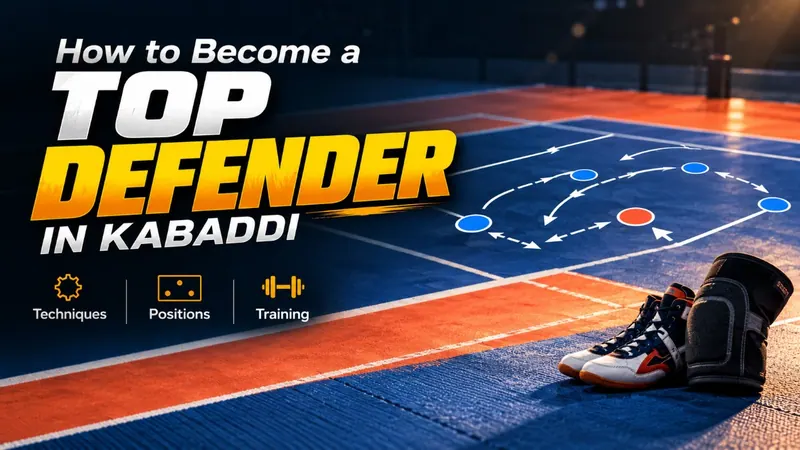
Defense is another important component in Kabaddi, where they can all set to change the crux of the game.
Here in this article we will dig deep down and understand on How to Become a Top Defender in Kabaddi which spans across- Techniques, Position and Training step by step in the below format:
1- Core Defensive Techniques (Tackles and Grips):
The Core Defensive Techniques build around for any defender in Kabaddi is mastered around two basic moves which needs constant innovation in times to come.
A- Ankle Hold: In this technique, where defender grip raiders ankle and pull them towards half of the court, where you need sharp timing and tight grip.
B- Thigh Hold: This technique is performed in singles/doubles domain, where defender pounce raider’s thigh using their body weight, where they try to break speed by placing shoulder near hip point.
C- Waist Hold: In this technique, defender have to wrap their arms around raider waist to lift or pin them mid air.
D- Block: Block is one of the most important quotient, where defender apply themselves in front of raider’s path to stall or completely stop their progress towards the mid line.
E- Dash: In this technique, defenders push raider out of bounds across the sideline or end line while ensuring body is in bounds.
F- Chain Tackles: In this technique, group of defenders such as corner and cover where they lock hands to restrict movement of raiders or trap them all together.
Let’s Decode All Defensive Position on Mat to Be shared in the below format:
- Kabaddi is often remembered for its raiders, their quick movements, impressive footwork and ability to collect points under pressure.
2. However, defence is equally important in determining the outcome of a match.
3. A strong defensive unit can change the momentum of a contest within seconds, especially when the opposition relies heavily on one or two attacking players.
4. Unlike raiding, where an individual often takes the initiative, defending requires patience, coordination, awareness and trust between teammates.
Defensive Training on Mat:
5. In kabaddi, seven players from each team are on the mat at a time. Every defender must understand when to attack, when to hold position and when to support a teammate.
6. One poorly timed tackle can allow the raider to escape, while a well coordinated defensive effort can produce an important point.
7. The left and right corners are among the most important positions in a defensive setup.
8. These players operate near the edges of the defensive formation and must remain alert whenever a raider approaches their side.
9. Corner defenders are often known for their ability to execute ankle holds, which involve catching the raider’s ankle and restricting movement before the attacker can retreat across the midline.
10. However, an ankle hold requires excellent timing. Attempting it too early can give the raider an opportunity to change direction, while a delayed reaction may allow the attacker to escape.
11. Corner defenders also need to recognise opportunities for thigh holds and other controlled tackling techniques, depending on the raider’s body position.
12. The challenge for a corner defender is to remain patient without becoming predictable. Experienced raiders often study defensive patterns and look for opportunities to exploit a defender who repeatedly attempts the same move.
13. Therefore, corners must observe the raider’s approach, balance and preferred direction before committing to a tackle.
14. The cover positions, located closer to the centre of the defensive formation, provide another important layer of protection.
15. Left and right covers must support their respective corners while preventing raiders from finding open spaces through the middle.
16. Their positioning becomes particularly important when a raider attempts a straight charge, uses sudden changes of direction or tries to create separation between defenders.
17. Cover defenders frequently use blocks, dashes and coordinated movements to restrict the raider’s escape route.
18. A block can stop forward movement, while a well timed dash can push the raider towards the boundary. Nevertheless, these techniques require proper judgement.
19. If a cover defender moves forward without sufficient support, the raider may exploit the gap and collect a point.
20. The central defenders, often referred to as in-players or players positioned between the main defensive roles, provide additional depth and help close gaps in the formation.
21. Their responsibilities include maintaining the defensive structure, supporting tackles and participating in coordinated chain movements.
22. Communication becomes especially important when the raider changes direction quickly or attempts a move that draws multiple defenders towards one side.
23. A successful defensive unit does not depend on individual strength alone. Players must understand each other’s movements and recognise when to provide support.
24. When defenders work together, they can limit the raider’s options and force the attacker into a difficult position.
25. Footwork is another essential part of effective kabaddi defence. Defenders cannot afford to stand still and react only after the raider makes a move.
26. They must continuously adjust their positions while maintaining balance and keeping their bodies ready for sudden action.
27. Natural running movement allows defenders to move forward and backward without losing control of their stance.
28. This is useful when the raider approaches cautiously, attempts to draw a defender out of position or suddenly accelerates towards the defensive line.
29. Maintaining balance during these movements helps defenders respond without unnecessary hesitation.
30. Leading leg footwork is equally important. By coordinating their steps and keeping their centre of gravity low, defenders can remain prepared to move in either direction.
More Technicalaties Behind Becoming Top Defender in Kabaddi
The objective is not simply to move quickly but to stay balanced enough to change direction when required.
A defender who moves too upright or takes unnecessarily large steps may struggle to react to a sudden toe touch or a quick escape attempt.
Cross leg footwork helps defenders reposition themselves laterally and diagonally.
This movement becomes useful when a raider approaches from an angle or attempts to move around the outside of the defensive formation.
Practising these movements improves the ability to close spaces and maintain the correct distance from the raider.
However, defenders must avoid crossing their legs carelessly, as poor balance can make them vulnerable to quick changes in direction.
Body positioning is closely connected to footwork. Defenders should maintain bent knees, an upright chest and a stable stance that allows them to react immediately.
Keeping a low centre of gravity helps them change direction, maintain balance and generate power during a tackle.
At the same time, they must avoid bending excessively forward, as this can reduce their ability to recover when the raider moves away.
Strength and conditioning also play a major role in defensive performance. Kabaddi defenders need powerful legs, strong grips, core stability and the ability to recover quickly after repeated high intensity movements.
Training on suitable mat surfaces helps players become familiar with match conditions, while supervised exercises on sand can develop strength and improve physical conditioning.
Squats, lunges, short sprints, resistance exercises and grip strengthening drills can support the physical demands of defending.
However, strength training should always be combined with technical practice. A powerful defender who lacks timing and coordination may still struggle against a skilful raider.
Chain tackling is another area that separates organised defensive units from individuals who rely entirely on personal ability.
| Defensive Technique | Description | Key Skills Required |
|---|---|---|
| A. Ankle Hold | The defender grips the raider’s ankle to restrict movement and prevent them from returning across the midline. | Sharp timing, strong grip and quick reaction. |
| B. Thigh Hold | The defender targets the raider’s thigh, using body weight and positioning near the hip to disrupt movement and reduce speed. | Strength, balance and body positioning. |
| C. Waist Hold | The defender wraps their arms around the raider’s waist to restrict movement and bring the raider under control. | Upper-body strength, grip and coordination. |
| D. Block | The defender positions their body in the raider’s path to stall or stop progress towards the midline. | Anticipation, positioning and strength. |
| E. Dash | Defenders use a coordinated push to drive the raider towards or beyond the boundary while remaining within the court themselves. | Timing, power and teamwork. |
| F. Chain Tackle | Two or more defenders, often corners and covers, coordinate their movements and maintain a connected formation to restrict the raider’s escape. | Communication, coordination and tactical awareness. |
| No. | Defensive Position / Aspect | Role and Responsibilities | Key Skills / Tactical Importance |
|---|---|---|---|
| 1 | Importance of Defence | While raiders attract attention through quick movements, footwork and point-scoring ability, defence plays an equally important role in determining match outcomes. | Discipline, awareness and match understanding. |
| 2 | Defensive Unit | A strong defensive unit can change the momentum of a match within seconds, especially against teams that depend heavily on one or two raiders. | Teamwork, patience and coordination. |
| 3 | Defensive Strategy | Unlike raiding, which often begins with an individual initiative, defence depends on players working together and trusting one another. | Communication, anticipation and collective decision-making. |
| 4 | Defensive Training on the Mat | Seven players from each team occupy the mat at a time. Each defender must understand when to attack, hold position or support a teammate. | Positioning, timing and tactical awareness. |
| 5 | Tackling Coordination | A poorly timed tackle may allow the raider to escape, while a coordinated defensive effort can secure a valuable point. | Judgement, teamwork and execution. |
| 6 | Left and Right Corners | Corner defenders operate near the edges of the defensive formation and remain alert when raiders approach their side. | Agility, anticipation and ankle-hold techniques. |
| 7 | Ankle Hold by Corners | Corner defenders frequently attempt ankle holds to restrict the raider’s movement and prevent a return to the midline. | Grip strength, sharp timing and quick reactions. |
| 8 | Timing the Ankle Hold | An early attempt may allow the raider to change direction, while a delayed reaction can provide an escape opportunity. | Patience, observation and accurate timing. |
| 9 | Alternative Tackling Techniques | Corners may use thigh holds and other controlled tackles depending on the raider’s body position and movement. | Adaptability, balance and body positioning. |
| 10 | Reading the Raider | Experienced raiders study defensive patterns and exploit defenders who repeatedly use the same technique. | Observation, unpredictability and tactical intelligence. |
| 11 | Corner Defender’s Judgement | Corner defenders must assess the raider’s approach, balance and preferred direction before committing to a tackle. | Decision-making and anticipation. |
| 12 | Left and Right Covers | Cover defenders operate closer to the centre of the defensive formation, supporting corners and protecting central spaces. | Coordination, positioning and defensive awareness. |
| 13 | Supporting the Corners | Covers provide backup to corner defenders and help prevent raiders from exploiting gaps in the defensive formation. | Communication, teamwork and reaction speed. |
| 14 | Handling Different Raiding Styles | Cover defenders must respond to straight charges, sudden changes of direction and attempts to separate defenders. | Agility, balance and tactical adaptability. |
| 15 | Blocks, Dashes and Coordination | Covers frequently use blocks, dashes and coordinated movements to restrict the raider’s progress and escape routes. | Strength, timing and teamwork. |
| 16 | Executing a Block | A block can stop the raider’s forward movement and restrict access to the midline. | Positioning, anticipation and controlled contact. |
| 17 | Executing a Dash | A well-timed dash can push the raider towards the boundary and reduce their escape options. | Explosive power, timing and coordination. |
| 18 | Avoiding Defensive Gaps | A cover defender moving forward without sufficient support may leave an opening that the raider can exploit to score. | Awareness, discipline and defensive balance. |
| 19 | Central Defensive Players | Central players help provide depth to the defensive formation and close gaps between teammates. | Spatial awareness, support and communication. |
Pathways to Become Top Defender in India:
A- To Become Top Defender in Kabaddi, you first need to develop knack of playing this combat sport.
B- Once you understand you have developed the knack all you need next is enroll in academy where you will be trained under good coaches where you will understand your game much better.
C- All Defensive prowess will flourish, where you will learn each and everything correctly, and next step is to gain exposure.
D- Once you gain exposure next step is certainly to move towards, participating in tournaments where they can learn the nuances of the game and move to next level.
E- Overall following all these pathways you become good enough to play for state as well for country depending on how consistent have been over the years.
Frequently Asked Questions about Top Defender in Kabaddi:
Q-1 Tell us some of the moves that every defender have to master to become Top Player?
Answer: The moves that every defender have to master are- Ankle Hold, Thigh Hold, Waist Hold, Block and Dash otherwise it would be extremely difficult to gather it in future.
Q-2: Tell us simple pathway from Grassroot to Becoming Top Defender in Kabaddi?
Answer: The Pathway to become Top Defender from Grassroot to Becoming Top Player include-
A- Start with knack of playing Kabaddi
B- Enroll yourself into academy
C- Start working for improving your game- under coach
D- Gets Exposure and start taking part in State and taking part across miscellnous tournament
E- Overall, they can play for State and India at the highest level.
Q-3: Talk a little bit about technicalities in Kabaddi?
Answer: Apart from learning defensive move it is interestingly important you need to work on agility and most importantly gaining body strength failing that you would not be able to stop raiders.
Working on strength and body weight will help you to dissect raider and gain and advantage over your opponents.
My Perspective:
Defenders, are also least talked people in Kabaddi arena, which is very similar to Bowlers in Cricket where all eyes are down to batters in gentlemen’s game and Raiders in combat sport.
Also Defenders stories should be celebrated and shared more and more where fans can gather perfect idea about what’s working and how they can make them popular who are vital part of Kabaddi Ecosystem.
In the high-octane world of sports, glory has a habit of gravitating toward aggression.
Cricket has long been defined by the boundary-hitting batsman, celebrated under the bright lights while bowlers grind through long spells on unforgiving pitches.
Kabaddi shares an almost identical narrative asymmetry. Yet, just as a cricket team cannot win Test matches without twenty wickets, no Kabaddi franchise can survive without a rock-solid defensive unit.
Defenders are the unsung anchors of the mat, operating in an environment where a single misstep or a fraction-of-a-second lapse in timing results in immediate penalty.
Defending in Kabaddi is an art form rooted in synchronized geometry, mental fortitude, and raw physical power.
Unlike raiders, who enjoy the initiative and control the pace of their 30-second raid, defenders operate under constant threat.
They must read subtle cues—a raider’s body language, foot placement, and eye movement—while maintaining strict spatial awareness relative to their teammates and the boundaries.
A successful tackle is rarely the achievement of one individual; it is the culmination of split-second trust.
A corner’s ankle hold is useless if the cover does not execute a prompt dash to block the raider’s path back to the midline.
This selflessness defines defensive play—one player often takes the physical brunt of the impact so the collective team secures the point.
To build a sustainable and deeply engaging Kabaddi ecosystem, the storytelling around defenders must evolve.
Broadening the narrative beyond raiders unlocks several key benefits for fans, young athletes, and the sport itself.
Transforming public perception requires deliberate action from broadcasters, leagues, and content creators:
Kabaddi is a battle of balance. While raiders provide the explosive sparks that light up the scoreboard, defenders build the foundation that wins championships.
By bringing their stories, strategies, and sacrifices into the mainstream spotlight, the sport honors its true backbone and delivers a richer experience for fans worldwide.