
How PKL Coaches Plan a Match: Tactics, Substitutions and Game Management
The Pro Kabaddi League Season 13 is currently placed in cliffhanger where nothing seems certain about marquee event when it will begun and what sort of excitment it would bring on the table. Here in this article we will…
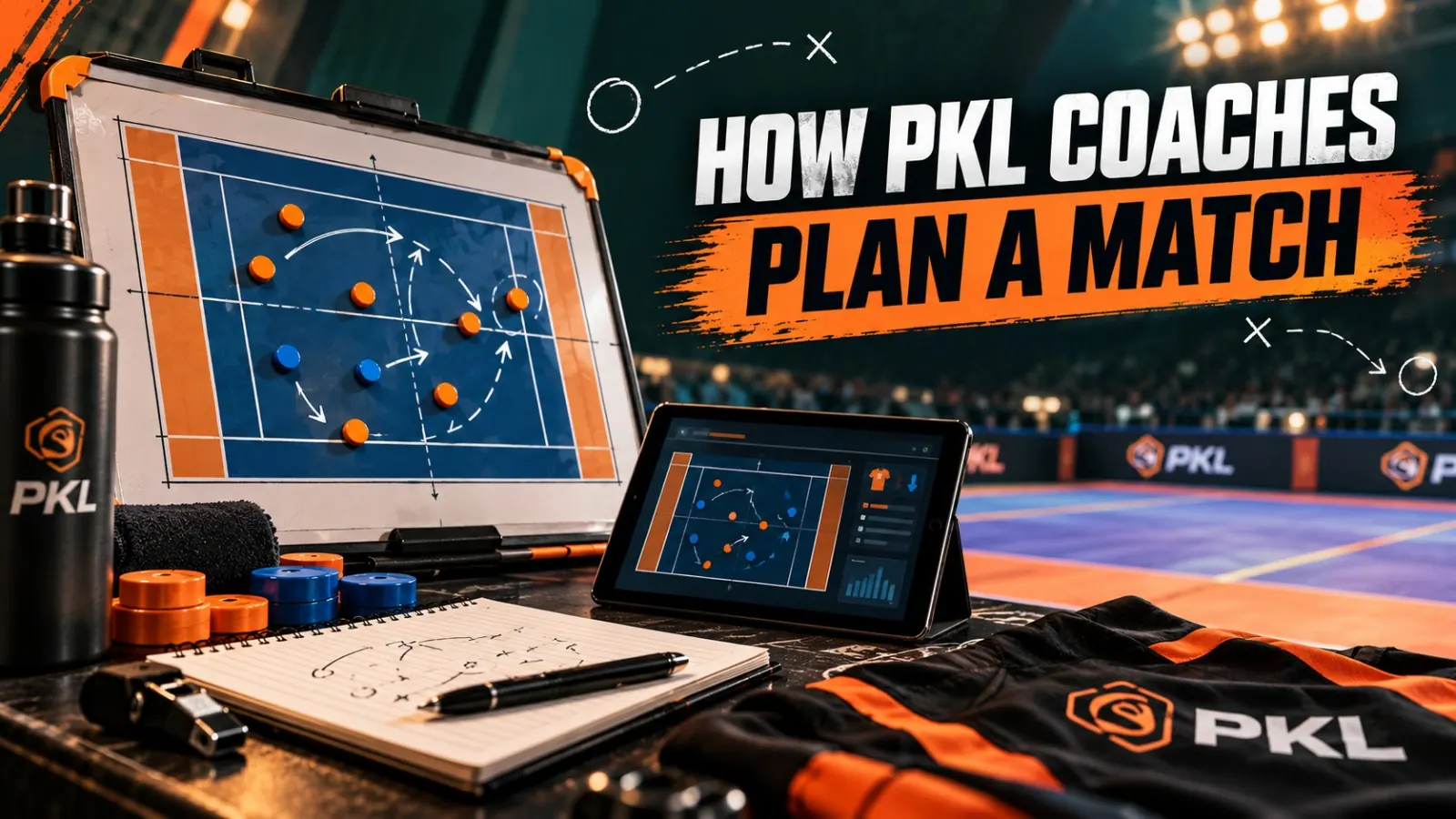
The Pro Kabaddi League Season 13 is currently placed in cliffhanger where nothing seems certain about marquee event when it will begun and what sort of excitment it would bring on the table.
Here in this article we will reveal how PKL Coaches plan any match which might involve various parameters which include- Tactics, Substitutions and Game Management to be shared in the below format:
- Video Analysis and Data Scouting:
Here in this domain, coaches would extremely rely on digital video scouting process rather than basic board drawings where you can dissect raider footwork, chain tackles and opponent tendencies.
2. Defensive Chain Structure:
Here in this domain, coaches work with players on court formations, based on strength of remaining players, where they employ on two form of defenses which include- 6 man to 7 man defenses & 4 man to 5 man defenses.
3. Raider Profiling:
Here in this domain, every raider matches with defensive where the later come up with their strength, where deep foot positioning as well as lure tactics are applied in order to avoiid any premature ankle as well as other injury related things.
4. Spontaieity vs Scripting:
Here in this domain, coaches plan pre- plan movement sequences like escape kicks vs diving kick holds also high speed game forces players to calculate probabilities and read micro cues in split second.
5. Matchday Squad Size:
Here in this domain, Team can name upto 14 players, on the matchday sheet (7 on court and 7 on bench)
There focus is also based all substitution strategy that could be used in match based simulations however substitutions is also ploy related to tactical payout where potential all out and super tackle positions are widely taken into consideration also substitutions is totally based on coaches call where they understand which player would pick and choose, so that team can stay ahead of curve as comparison to another.
6. In Game Management:
When it comes to In Game Management, include several things which include- Direct Coaching Communication where coaches guide players ahead of match situation as well as in game situations where they are taught to do wonders to the best of their ability.
Coaches need to guide players when it comes strategic time outs and managing all out and in and out raids where they can guide players on all sort of scenarios of the game, where players are extremely prepared once they face exact match.
More Technical Details about PKL Coaching Ecosystem:
Beyond the fundamental setup on the mat, modern Pro Kabaddi League coaching strategies dive deep into the intricate mechanics of time management, psychological momentum, physical endurance, and low-player court scenarios.
One of the most critical aspects of modern tactical planning revolves around Do-or-Die raid mechanics and clock manipulation.
In high-pressure encounters, coaches construct dedicated scenarios during pre-match preparations to control the flow of time and maximize pressure on opposition defenders.’
Coaches explicitly dictate whether a raider should press for an early point within the first ten seconds of a raid or stall intentionally until the final five seconds to force a desperate, reactive tackle attempt from the defensive chain.
During these crucial raids, analytical data dictates which defender on court has shown the highest error rate under pressure, allowing raiders to target specific corner or cover positions with surgical precision.
Teams also routinely use empty raids as a tactical weapon, intentionally cycling through two non-scoring raids using secondary raiders to trigger a mandatory Do-or-Die raid for the opposition, effectively transferring the burden of risk onto the opponent’s primary point-scorer.
Equally decisive to mat management is the integration of biomechanical monitoring and fatigue management.
With the grueling nature of the tournament schedule, physical conditioning and real-time load management directly impact the late-stage performance of players.
Coaching staff closely observe movement fluidity and impact forces from heavy contact scenarios like dashes, blocks, and thigh holds.
To prevent late-game defensive collapses or sudden muscular injuries, coaches construct systematic rotational schedules, granting primary raiders brief two-to-three-minute breathers on the bench.
These strategic rests keep key players explosive during the crucial closing minutes of a match.
Strategic timeouts are used not just for rapid tactical adjustments, but as vital recovery micro-sessions where support staff help regulate heart-rate spikes, apply instant cold therapy, and manage rehydration so players retain maximum sharp cognitive processing during split-second defensive decisions.
Psychological warfare and tempo control represent another dimension of advanced coaching methodology.
Beyond raw physical prowess, controlling the emotional temperature of the mat can turn the tide of any contest.
Coaches prepare their squads to employ subtle mind games designed to frustrate and disorient opposition playmakers.
Defenders are instructed to deliver aggressive, authoritative chain tackles early in the contest to unsettle the opposition’s lead raider and plant seeds of doubt.
Conversely, when maintaining a narrow lead in the final quarter, coaches instruct their raiders to systematically utilize the full thirty-second raid clock without taking unnecessary risks deep near the baulk or bonus lines.
This deliberate slowing down of match velocity starves the opposition of raiding opportunities, forcing trailing teams into making impulsive, reckless defensive tackles out of sheer desperation.
Furthermore, dynamic court adaptation during extreme numerical disadvantages—such as Super Tackle situations—requires dedicated tactical training.
When a team is reduced to three or fewer defenders on the mat Coaches drill defenders to form compact, synchronized units that intentionally yield space along the bonus line, baiting overambitious raiders into taking an attractive lure before snapping shut with a unified ankle hold or devastating midline dash.
If a team finds itself on the brink of an All-Out with only a single raider remaining, the objective shifts instantly from aggression to tactical survival.
Raiders are trained to prioritize touch points or bonus line crossings that trigger immediate revivals, preserving court presence and delaying the severe point penalty that comes with an All-Out.
Through these multidimensional strategies, coaches continuously shape the game from the sidelines, ensuring their teams remain adaptable, resilient, and tactically sharp throughout every moment of the match.
Here is your article converted into one clean, publish-ready table using only the details you provided.
| Coaching Area | How Coaches Plan It | Tactical Purpose / Match Impact |
|---|---|---|
| Video Analysis and Data Scouting | Coaches rely heavily on digital video scouting instead of only basic board drawings. They dissect raider footwork, chain tackles and opponent tendencies. | Helps teams identify patterns, strengths and weaknesses before entering the mat. |
| Defensive Chain Structure | Coaches work on court formations based on the strength of the remaining players, using 6-man to 7-man defences and 4-man to 5-man defences. | Allows the defence to adapt according to available players and match situations. |
| Raider Profiling | Every raider is matched against defensive strengths. Deep foot positioning and lure tactics are applied to avoid premature ankle and other injuries. | Helps raiders choose safer movements while targeting defensive gaps. |
| Spontaneity vs Scripting | Coaches pre-plan movement sequences such as escape kicks and diving kick holds. High-speed play forces players to calculate probabilities and read micro-cues in split seconds. | Balances preparation with on-mat instinct during fast-changing raids. |
| Matchday Squad Size | A team can name up to 14 players on the matchday sheet: 7 on court and 7 on the bench. | Gives coaches rotation options and tactical flexibility throughout the match. |
| Substitution Strategy | Substitutions are planned through match simulations and treated as tactical ploys. Potential all-out and super-tackle situations are considered. The final call rests with the coach, who decides which player to bring in. | Helps the team stay ahead of the opposition by bringing the right player into the right situation. |
| In-Game Management | Coaches communicate directly with players before and during matches, guiding them through different situations. They also guide players during strategic timeouts and while managing all-outs and in-and-out raids. | Keeps players prepared for exact match scenarios and helps them perform to the best of their ability. |
| Do-or-Die Raid Mechanics | Coaches create dedicated pre-match scenarios for Do-or-Die raids. They decide whether a raider should press for an early point within the first 10 seconds or stall until the final five seconds to force a desperate, reactive tackle. | Controls pressure and forces defenders into mistakes during high-stakes raids. |
| Clock Manipulation | Coaches use time control as a tactical tool, especially in pressure situations, to manage the flow of the raid and the match. | Can unsettle the opposition and create favourable defensive or raiding opportunities. |
| Data-Driven Targeting | Analytical data identifies the defender with the highest error rate under pressure. Raiders then target specific corner or cover positions with precision. | Increases the chance of scoring against the weakest defensive link. |
| Empty Raids | Teams intentionally use two non-scoring raids through secondary raiders to trigger a mandatory Do-or-Die raid for the opposition. | Transfers the risk burden onto the opponent’s primary point-scorer. |
| Biomechanical Monitoring and Fatigue Management | Coaching staff observe movement fluidity and impact forces from heavy contact actions such as dashes, blocks and thigh holds. They build systematic rotation schedules. | Prevents late-game defensive collapses and reduces the risk of sudden muscular injuries. |
| Strategic Rest for Raiders | Primary raiders are given brief two-to-three-minute breathers on the bench through planned rotations. | Keeps key raiders explosive during the crucial closing minutes. |
| Strategic Timeouts | Timeouts are used for tactical adjustments and as recovery micro-sessions. Support staff regulate heart-rate spikes, apply instant cold therapy and manage rehydration. | Helps players retain sharp cognitive processing for split-second defensive decisions. |
| Psychological Warfare | Coaches prepare squads to use subtle mind games. Defenders deliver aggressive, authoritative chain tackles early to unsettle the opposition’s lead raider and create doubt. | Disrupts the confidence and rhythm of opposition playmakers. |
| Tempo Control While Leading | When protecting a narrow lead in the final quarter, raiders use the full 30-second raid clock without taking unnecessary risks near the baulk or bonus lines. | Slows the match, reduces opposition raiding chances and forces desperate defensive tackles. |
| Super Tackle Adaptation | When reduced to three or fewer defenders, teams drill compact, synchronized defensive units. They yield space along the bonus line, bait raiders, then close with an ankle hold or midline dash. | Turns a numerical disadvantage into a trapping opportunity. |
| All-Out Survival Plan | If a team is close to an all-out with only one raider remaining, the focus shifts from aggression to survival. Raiders prioritise touch points or bonus-line crossings that trigger immediate revivals. | Preserves court presence and delays the severe point penalty of an all-out. |
| Overall Coaching Impact | Coaches continuously shape the game from the sidelines through planning, adaptability, resilience and tactical sharpness. | Ensures the team remains prepared for every phase and pressure moment of the match. |
My Perspective:
Overall Pro Kabaddi League Coaches planning would certainly change in times more sports science, tactical ability should be done in effective way.
There would be high chances instinct would come into consideration but sports science, tools and other aspect would come into space.
The Pro Kabaddi League Season 13 should certainly offer more exciting opportunity however the quotient certainly lies where technological aspect would come into picture for sure.
Overall Pro Kabaddi League Coaching have various methodology introduced however when it comes to instinct it would always remain one of the most tactical thing ever.
Pro Kabaddi League Season 12 was exciting where we witnessed several raw emotions from coaches however season 13 is yet to be announced it would be interesting to see how they would fare in times to come.